CURIOUS : EAST AFRICA UNIVERSITY Puntland State of Somalia CURIOUS PROJECT: CASCADING TRAINING REPORT
Strengthening Nursing and Health-Professions Education
Date: 1–2 September 2026
Venue: East Africa University (EAU), Puntland State of Somalia
1. Background
East Africa University (EAU), Puntland State of Somalia, successfully conducted a two-day cascading training workshop on Strengthening Nursing and Health-Professions Education on 1–2 September 2026 under the CURIOUS Project.
The training was designed to cascade knowledge, approaches and lessons gained through the CURIOUS Project and international partner engagement to EAU academic staff and key national stakeholders. The workshop focused particularly on modern approaches to nursing and health-professions education, learner-centred pedagogy, clinical reasoning, competency-based education, teamwork, problem-solving and reflective learning.
In addition to EAU academic staff, the University engaged important national stakeholders, including representatives from the Nursing Association, Medical Doctors Association and Midwives Association.
The participation of these stakeholders created an important platform for dialogue between higher education institutions, health-sector professionals and professional associations on the future development of nursing and health-professions education in Somalia.
2. Main Objective
The main objective of the two-day cascading training was to strengthen the capacity of EAU academic staff to apply contemporary, learner-centred and competency-based approaches to nursing and health-professions education, while engaging relevant professional stakeholders in dialogue on curriculum relevance, graduate competencies and health-workforce needs.
The training also aimed to:
- Share knowledge and lessons gained through the CURIOUS Project and international partner engagement.
- Strengthen understanding of contemporary nursing and health-professions education.
- Promote competency-based learning and practical performance.
- Encourage clinical reasoning, professional judgement and problem-solving.
- Introduce learner-centred and interactive teaching approaches.
- Strengthen collaboration between universities, government institutions and professional associations.
- Explore opportunities for improving nursing curricula and teaching practices at EAU.
- Support the long-term vision of EAU to produce competent, reflective and practice ready health professionals.
3. Opening and Welcome
The workshop commenced with opening remarks by Sheikh Mohamoud Hajji Yusuf, Member of the Founding Council of East Africa University.
In his opening remarks, he welcomed the participants and emphasized the importance of strengthening health-professions education and building stronger cooperation between the University and national stakeholders.
The opening session also provided an opportunity to introduce the participants, present the objectives of the workshop and discuss expectations for the two-day programme.
EAU’s vision for strengthening nursing and health-professions education was presented, highlighting the University’s commitment to improving the quality, relevance and practical orientation of health-professions training.
Bishar Abdi Jama, CURIOUS Project Administrator, coordinated the workshop arrangements and moderated the opening stakeholder engagement session. Representatives from the invited professional associations contributed to the discussion during this opening session, sharing perspectives on health-professions education, workforce needs and graduate preparation. Following the stakeholder session, the invited representatives concluded their participation, and the cascading training continued with the EAU academic participants.
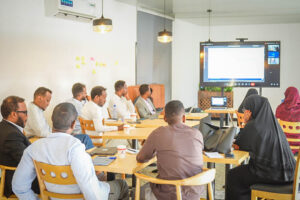
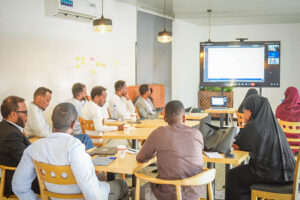
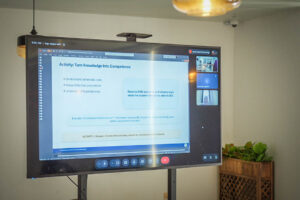
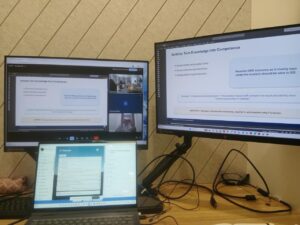
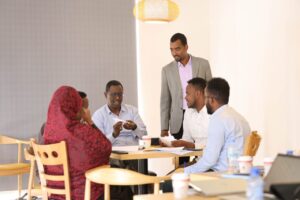
Opening session of the CURIOUS Project cascading training at East Africa University.
4. CURIOUS Project Overview and Introduction to the Cascading Training
Fahad Kulane, Director of International Relations at East Africa University, presented an overview of the CURIOUS Project, including its objectives, consortium partnership, key areas of work and EAU’s participation in project activities. He also highlighted EAU’s engagement with the European partner institutions and the importance of cascading knowledge gained through the project to the wider University community.
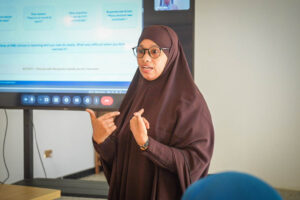
Dr Jamila Ahmed Aden, CURIOUS Project Coordinator, then provided an overview of the cascading training, introducing its purpose, objectives and focus on strengthening nursing and health-professions education at EAU. She presented key educational content and lessons from the CURIOUS international training, with particular emphasis on competency-based education, student-centred learning, clinical reasoning, active learning, teamwork, problem-solving and practical application.
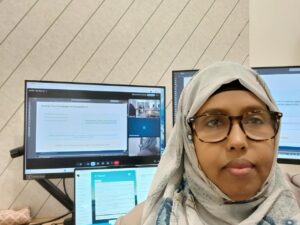
Dr Jamila Ahmed Aden and Fahad Kulane had participated in person in the CURIOUS international training activities with European partner institutions, while Bishar Abdi Jama, CURIOUS Project Administrator, and Sadia Abdirizak Yusuf had participated online. During the cascading training, Fahad, Bishar and Sadia supported the group discussions and practical learning activities. Together, the team contributed to sharing, contextualising and applying the learning from the international training with the wider EAU academic team.
Participants also reflected on how approaches and experiences gained through engagement with CURIOUS international partners could be adapted to the Somali higher education context, taking account of local institutional realities, culture and needs. The discussion emphasised moving beyond the transfer of knowledge alone towards teaching approaches that encourage active participation, reflection, teamwork, problem-solving and practical application.
5. Stakeholder Engagement in Health-Professions Education
A key component of the opening programme was engagement with relevant professional stakeholders, including representatives from the Nursing Association, Medical Doctors Association and Midwives Association.
The invited stakeholders shared perspectives on the expectations of nurses and other health professionals and the importance of preparing graduates with competencies relevant to healthcare practice. The discussion highlighted the value of collaboration between higher education institutions, healthcare professionals and professional associations in strengthening the relevance of health-professions education and curricula to health-system and workforce needs.
Following this session, the invited stakeholders concluded their participation, and the workshop continued with the EAU academic participants, focusing on the cascading of educational approaches and practical teaching and learning activities.
6. From Knowledge to Professional Competence
Following the stakeholder engagement session, the cascading training continued with EAU academic participants. The session explored the importance of moving beyond predominantly content-focused and lecture-based instruction towards teaching and learning approaches that support the development of professional competence and practical performance.
Participants considered the importance of developing:
- Professional competence
- Clinical reasoning
- Professional judgement
- Communication skills
- Teamwork
- Problem-solving
- Practical performance
- Reflective practice
The discussion emphasised that effective health-professions education should focus not only on what students know, but also on their ability to apply knowledge effectively in professional practice.
7. Learner-Centred Approaches and Case-Based Learning
- The training introduced participants to learner-centred approaches and explored why nursing and health-professions students benefit from integrated and active learning.
Rather than relying primarily on isolated subject-based instruction, participants examined approaches involving:
- Integrated learning
- Clinical scenarios
- Case-based learning
- Teamwork
- Problem-solving
- Student participation
- Reflection and feedback
Through group discussions and case analysis, participants considered how realistic clinical situations can be used to encourage students to connect theoretical knowledge with practical decision-making.
8. Interactive “Build, Test & Improve” Exercise
One of the highly interactive components of the workshop was the “Build, Test & Improve” exercise.
Participants were divided into groups and given a practical task that required them to develop, test and improve a solution.
The activity demonstrated the difference between traditional instruction-led learning and learning through:
Exploration → Testing → Feedback → Reflection → Improvement
The exercise encouraged participants to experience first-hand how active learning can stimulate collaboration, creativity, critical thinking and continuous improvement.
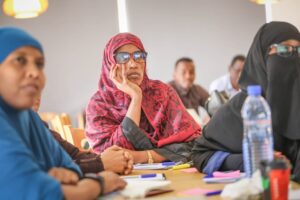
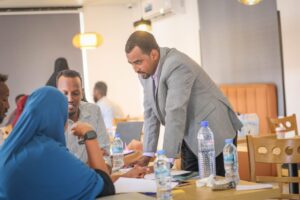
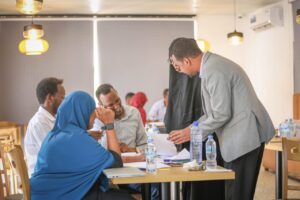
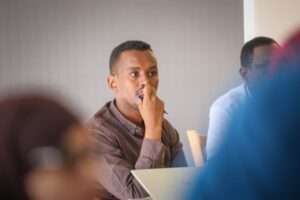
Participants engaging in an interactive learning activity designed to demonstrate exploration, feedback, reflection and continuous improvement.
9. Enabling Learning and Pedagogy – The Airplane Exercise
The workshop also included an interactive Airplane Exercise, designed to demonstrate different approaches to teaching and learning.
Participants were divided into two groups and challenged to complete the activity using different learning approaches.
The exercise contrasted:
Behaviourist / Protocol-Driven Learning with Constructivist / Trial-and-Error Learning
The activity allowed participants to experience how learners respond differently when they are given fixed instructions and protocols compared with situations where they are encouraged to explore, test ideas, learn from mistakes and construct their own understanding.
The exercise generated discussion on the role of educators as facilitators of learning rather than solely as providers of information.
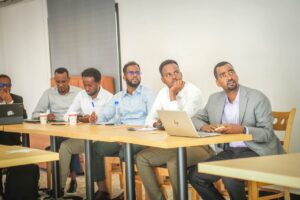
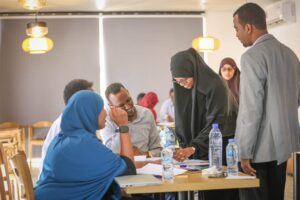
AIRPLANE EXERCISE]– Participants taking part in the interactive Airplane Exercise to explore different approaches to teaching and learning.
10. Key Messages and Lessons Learned
Several important messages emerged from the two-day training.
10.1 From Knowledge to Competence: Participants recognized that effective healthprofessions education should not focus only on what students know, but also on what they can do with what they know.
10.2 Learning Should Be Active: Interactive learning, case analysis, clinical scenarios and group activities can encourage deeper understanding and improve student engagement.
10.3 Clinical Reasoning Is Essential: Future nurses and health professionals need opportunities to develop clinical reasoning and professional judgement rather than simply memorizing information.
10.4 Collaboration Is Critical: Strengthening nursing education requires collaboration among universities, government institutions, professional associations and healthcare providers.
10.5 Reflection and Feedback Improve Learning: The training demonstrated the importance of allowing learners to test ideas, receive feedback, reflect on their performance and improve.
10.6 International Lessons Must Be Contextualized: Experiences from international partners provide valuable opportunities for learning, but successful implementation requires adaptation to the Somali context, institutional capacity and local healthcare needs.
11. Outcomes of the Training
The two-day training contributed to:
- Increased awareness of contemporary approaches to nursing and health-professions education.
- Enhanced understanding of learner-centered pedagogy.
- Greater awareness of competency-based education.
- Practical exposure to interactive teaching methodologies.
- Enhanced understanding of clinical reasoning and professional judgement.
- Strengthened dialogue between EAU and national health-sector stakeholders.
- Identification of opportunities for improving nursing curriculum and teaching practices.
- Strengthened institutional capacity to cascade knowledge gained through the CURIOUS Project.
12. Way Forward
Following the training, East Africa University intends to continue working with its academic staff and national stakeholders to translate the lessons from the workshop into practical improvements in teaching and learning.
Potential areas for continued collaboration include:
- Further development and review of nursing curricula.
- Integration of learner-centred teaching approaches.
- Strengthening clinical and practice-based education.
- Development of case-based and scenario-based learning materials.
- Faculty development and continuous professional learning.
- Strengthening collaboration with healthcare institutions and professional bodies.
- Continued exchange of knowledge and good practices with CURIOUS Project partners.
- Monitoring and evaluating the impact of new teaching approaches.
13. Conclusion
The CURIOUS Project Cascading Training on Strengthening Nursing and Health Professions Education, held at East Africa University on 1–2 September 2026, provided a valuable platform for academic learning, practical experimentation and stakeholder engagement.
Through interactive presentation, group discussions and practical exercises, participants explored the transition form predominantly content-focused teaching towards more student-centered and competency-based approaches that connect knowledge with clinical reasoning, professional judgement and practical performance.
Engagement with relevant government institutions and professional associations also provided opportunities to strengthened dialogue between higher education and the health sector on curriculum relevance, graduate competencies and the preparation of health professions for practice.
EAU is grateful to its CURIOUS Project consortium partners for their continued collaboration, knowledge exchange and commitment to strengthening higher education capacity. The University looks forward to building on the lessons of the cascading training as it continues to strengthen curricula, teaching practices and collaboration with national and international partners.
Group Photos EAU Staff and Key Stakeholder